

Moosonee & Tidewater Provincial Park Trip Guide
- shawnaexplores
- Sep 21, 2025
- 10 min read

Raw, rugged, remote - there's no shortage of adjectives to describe the northernmost operating Ontario Provincial Park. Tidewater is a hidden gem tucked away in the northeastern reaches of Ontario, and it's the perfect place for those looking to get off the beaten path.
When I needed to pivot my summer plans this year, I wanted to think outside the box. I grabbed my map of Ontario for inspiration, which led me to a small, remote provincial park that few people visit. Reaching Tidewater Provincial Park requires some effort, and there is limited information available online. As a type A personality who struggles with spontaneity, I knew a trip to Tidewater would push me out of my comfort zone—was I ready for the challenge? Spoiler alert: I was! Join me on my 48-hour adventure as I explore Moosonee, Moose Factory, and Tidewater—an incredible Ontario journey that's definitely bucket-list-worthy!
The Polar Bear Express
Moosonee is a small town in Northeastern Ontario and is Ontario's only saltwater port. Known as the "Gateway to the North," you can't simply drive to this town in the summer months (although it may be accessible by ice roads in the winter), so our adventure will start and end in Cochrane, Ontario!
During the summer, the only ways to reach Moosonee are by train or plane. I chose the more budget-friendly train option, in the form of the iconic Polar Bear Express. From late October to June, this train operates on Mondays, Tuesdays, Thursdays, and Fridays, with additional weekend services in the summer. Many travellers take the train for a day trip, spend a few hours in Moosonee, and return the same evening. I decided to level up my adventure with a visit to Tidewater, which would allow me to check another Ontario Park off my list. While accommodations in the area can be pricey, backcountry camping at Tidewater was affordable, so I could splurge on other aspects of the trip.

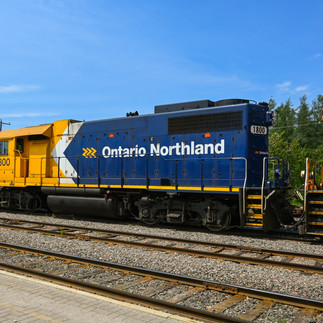




The train departs from Cochrane to Moosonee at 9 am and returns from Moosonee to Cochrane at 5 pm. Each trip lasts approximately 5 hours. However, in 2025, there were significant delays caused by rail upgrades, which should be resolved by next year. These delays left day trippers with limited time to explore Moosonee, so it's important to keep this in mind when planning your visit.
The train is quite comfortable and well equipped, with plugs to charge your electronics, WiFi, reclining seats and footstools, and plenty of room for luggage. I chose to store my bags, but especially if you're just heading north for a night or two, there shouldn't be a problem bringing all your gear on board. There's a dining car with a regular menu and daily specials that you can check online before you go. I found the prices to be quite reasonable (especially compared to the costs of groceries in Moosonee) and the food wasn't bad, either!
It's incredible to watch the landscape transform as you travel north - the trees become smaller, and the scenery shifts to muskeg. As you approach Moosonee, stay alert! The view from the bridge over the Moose River is stunning, and you might even see a few beavers swimming by.
Booking Tip: If you're a solo traveller, book window seats on opposite sides of the train so you can see the scenery from both angles
Luggage: If you're checking your bag in Cochrane, fill out a luggage tag and drop off at the kiosk at the back of the station. In Moosonee, I had to walk to the back railcar and put on/take off my luggage myself - you should still add a luggage tag!
Cost: Approximately $120/adult round-trip in 2025
Parking: Free short-term (up to 3 days) parking is available in the lot beside the station, and long-term (up to 7 days) parking is available on the other side of the tracks.
Moose Factory
While researching activities in the area, Moose Factory caught my attention for two reasons: the Hudson's Bay Staff House museum and the Cree Cultural Interpretive Centre (CCIC). I reached out to Kim Cheechoo, the Tourism Officer for Moose Cree First Nation, to arrange a meeting and a tour of the island. I made my way to the water taxi docks, a 10-minute walk with my heavy backpack, and was guided into a boat shared with others headed to the same place. The taxis, which only accept cash, cost $25 per person (as of 2025). After a 10-minute ride to the island, Kim was waiting at the dock to pick me up in her truck.
Moose Factory, originally known as Moose Fort, was the location of the second Hudson's Bay Company trading post established in 1673. However, the Cree people have lived there for much longer. Our first visit was to the Staff House, the last remaining fur trade residence in Canada, which now houses a museum depicting life at the outpost and some of the history of the HBC. It felt like stepping back in time. This museum can only be visited through a pre-arranged tour, and Kim allowed me to explore and read the interpretive panels at my own pace while also sharing some stories about her family. There are also a few guest rooms available here on the upper level, which can currently be booked through Kim.


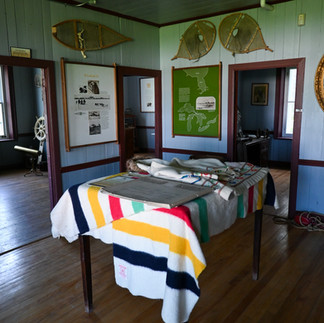

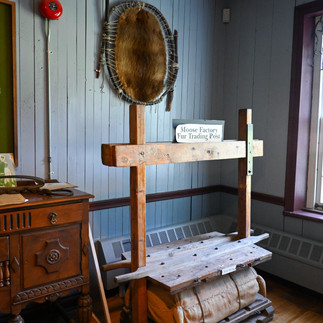
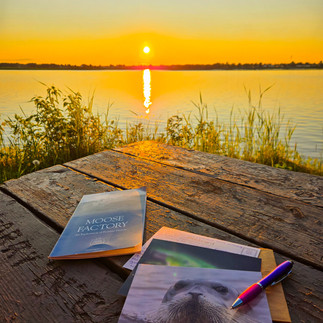
Next, we made the short drive to the CCIC. The centre offers a fascinating insight into traditional Cree life, both pre- and post-European contact. Many customs are still practiced in the areas today. I feel like we have so much we can learn from Indigenous practices in respecting our earth, and this was no exception. There were also crafts available for purchase (I picked up a few postcards to write to family at camp), and I booked a private boat tour while I was here.

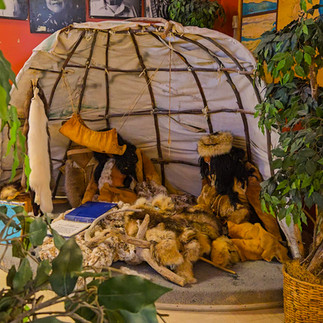




After I finished my visit at the CCIC, Jaime (Kim's colleague and cousin) took over my tour of the island, and asked if I needed to stop by the grocery store for supplies before moving on to my next destination. Moose Factory has a population of about 2,000, which varies with the arrival of staff for teaching at the school and working at the medical center. Jaime dropped me off at the boat taxi docks, where I caught a ride to my evening destination - Tidewater Provincial Park.
Costs: Free to tour the island, $20 water taxi from Moose Factory to Tidewater
Tidewater Provincial Park
Tidewater, named for the fluctuating tides of Moose River where it is located, consists of five small islands between Moosonee and Moose Factory. There are 10 backcountry campsites on Charles Island, which is only accessible by boat. Only one other site was occupied by a group of six canoeists who were on their last stop on their paddle up the Moose River. After getting contact information from the taxi driver, just in case (if you're not being picked up for a private boat tour, getting a contact is a must or you will have no way off the island), he dropped me off at the green park sign.There was once a dock at this location, but he informed me that it no longer exists and brought me as close as possible to avoid wading in deeper water. I faced a short yet awkward climb with my backpack up a steep hill, which led to a path running along the waterfront where the campsites are situated.

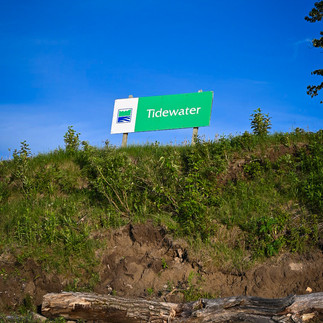

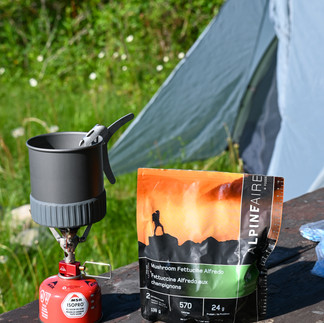

Behind the Tidewater sign is a registration box. I dropped my $10 camping fee into the money deposit tube, but realized later you can register in advance online - it's hidden under the "Backcountry Registration" tab on the Ontario Parks reservation site, which is a different tab than "Backcountry". Sites are first-come, first-serve, and there are porta-potties and animal-proof trash bins dotted along the path. Day visitors can stop by as well, although there isn't a whole lot to do on the island - there are no hiking trails here, so it's mostly a place to relax and take in the views. I made my way down the path to get the lay of the land and choose my campsite.
During my visit in late June, the bugs were relentless. Although my backwoods DEET bug spray reduced the swarm of insects buzzing around me, I still ended up with dozens of bites during my stay on the island. I endured the mosquitoes for the sake of the view and enjoyed a stunning sunset while writing postcards, having dinner, and watching for wildlife. Unfortunately, I didn't spot any, but I heard that campers later in the summer saw seals right from their campsite. I did spot a few beautiful birds, so it wasn't a complete loss - bring your binoculars!
After dinner, I trekked back to the registration station, thinking I would stash my food in the wooden bin. It wasn't secure storage in any way, but I realized that the trees up north are not suitable for bear hangs, and my dry bag wouldn't keep the mice away from my campsite. I regretted not investing in a bear-proof bin, but it was too late. As I was brushing my teeth, a few of the canoe campers came to find me - and warn me.
They had just watched a bear swim to the island!
At this point, I started to panic a bit because I didn't have my bear spray that I usually take into the backcountry. I had assumed I couldn't bring it on the train, but looking back, it wouldn't have been an issue. I asked if I could store my food and the clothes I had eaten in within their food barrels, but for some reason they seemed hesitant to agree. They helpfully suggested using the bear-proof trash bins to stash my dry bag that I use as my bear hang, which wasn't my favourite idea but was the safest option available. The campers kindly offered to let me join them if I felt unsafe, but I decided to take my chances after putting my food in the trash bin, which thankfully wasn't too unpleasant since it was early in the season.
A few hours later, still wide awake with my Kobo for company, I heard a loud splash followed by more splashing. I figured this must be the bear leaving the island, and scrambled out of my tent to see if I could make anything out that would help ease my fears. I couldn't see anything, but I managed to convince myself that the bear had left and I could relax. Since it was already past midnight, I checked for the northern lights but the sky was quiet. I returned to the tent and, with my nerves somewhat calmed, I was finally able to fall asleep.

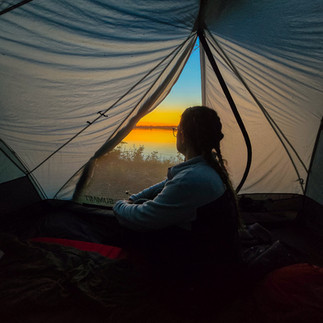

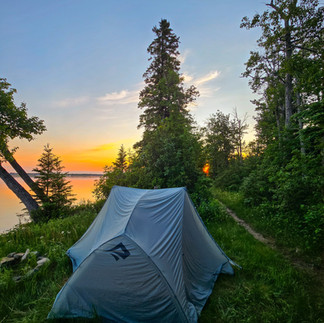

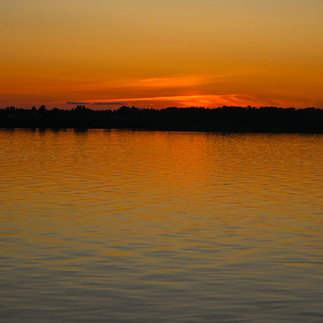
Early the following morning, I rose to watch the sunrise. While I had found the sunset beautiful, this was something extraordinary. The water was calm, no boat engines were disturbing the peace, and the colours were surreal. I made my way back down to the water and was able to see how far it had receded at low tide. When the bugs became unbearable (since I hadn't yet reapplied my bug spray), I returned for a few more hours of sleep before preparing breakfast, packing up, and heading to the beach for the next adventure.
Tips: Bring your own fresh water (the salinity and high sediment content of Moose River isn't suitable for filtering), high-quality bug spray, and a bear canister or bear-proof food storage bag.
Good to know: There's great cell service on the island, but you'll need to bring your own chargers to keep your phone powered - the island doesn't have any facilities.
Operating Dates: Late June to early September, confirm on the Ontario Parks website before planning your visit. Day users can drop the $5 fee into the cash bin, and stickers and patches for the collectors are available at nearby parks - I got mine at Esker Lakes.
James Bay
This was the splurge of my trip, particularly because I was travelling alone and had no one to split the cost with. I decided that, having come this far north, I couldn't miss journeying the final few kilometres to the mouth of James Bay. This turned out to be one of the highlights of my Northeastern Ontario road trip! James Bay holds historical significance for Canada, as the Cree people used the rivers flowing into it for fur transportation, and the Hudson's Bay Company set up trading posts there over 350 years ago, long before Canada was a country.
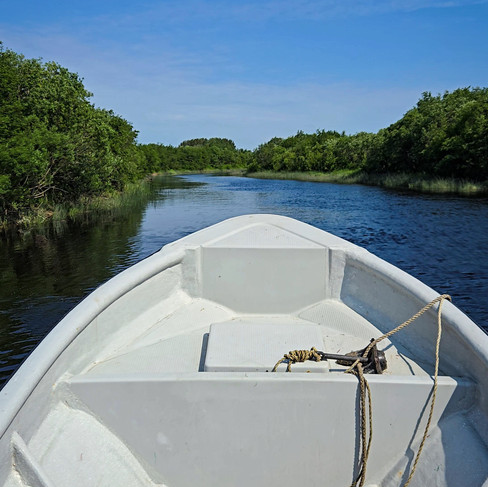
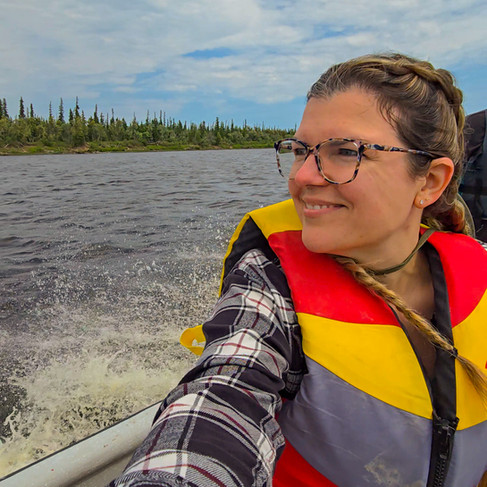
After my guide picked me up and got me outfitted in my life jacket, we headed out on the 2-hour tour that would bring us to the mouth of James Bay and back to Moosonee. Along the way, he highlighted areas where locals fish and hunt, and we kept a lookout for wildlife. We mostly saw bald eagles and beavers, but occasionally, you might be fortunate enough to see seals or beluga whales! My guide was excellent at stopping whenever we encountered wildlife, allowing me time to take photos. He was very friendly and shared a few stories about growing up in the area.


Cost: $350 (price varies based on number of passengers, but the cost per person would decrease overall)
Moosonee
Upon my arrival back to the mainland, I made my way to the station, hoping to leave my backpack there so I could explore the town freely. Unfortunately, there was no luggage storage available. Instead, I headed back out to wander around town, grateful for my spring backpacking training that prepared me for carrying the weight of my bags. I downloaded the Moose River Tours app to learn about the history of Moosonee, Moose Factory, and the Ontario Northland Train. Maps were also available at the Town Office or Railcar Museum. Although many businesses have closed due to the pandemic's impact on tourism, these resources remain useful for navigating the town and discovering its history.
My first destination was the Railcar Museum, conveniently located just steps from the station. The cultural history of the region is showcased in an old baggage car, and the museum attendant was eager to answer any questions. I then headed to the waterfront to enjoy the views of Tidewater from across the river and people-watch at the taxi dock. Afterward, I took a stroll around town, wandering through residential streets, past the community garden, and the church before visiting the Northern Store to gawk at the grocery prices and pick up a few (costly) snacks for lunch. Although I felt a bit foolish carrying my gallon of water on the train and around town on the first day, I was happy with my choice after seeing the market price - nearly $10 for a gallon. There's a KFC inside the Northern Store, but otherwise, food options in town are scarce.





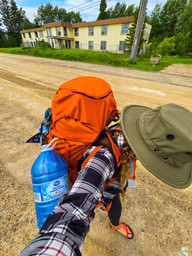

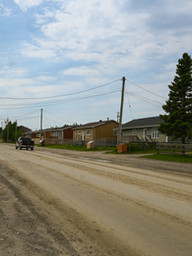


I had hoped to at least check my backpack on the train once it arrived from Cochrane (it was scheduled to come in at 2 pm) to have a few hours to explore the town unencumbered. However, thanks to the construction delays, the train didn't arrive until half an hour before the scheduled departure, so I gave up on exploring since my pack was feeling quite heavy. Instead, I went to a grassy area across from the station and spread out my tent to dry, as it had still been soaked with morning dew when I packed up. Eventually the train arrived, and I was more than ready to settle in and relax for the journey back to Cochrane, where a hot shower and a comfortable bed awaited me.
While I would absolutely recommend this adventure to anyone who likes to get off the beaten path, it's important to remember that these are not your typical tourist destinations - come prepared for cultural experiences that will open your mind. These communities are still recovering from the hit to tourism from 2020, so do your best to arrange everything in advance to make the most of your experience!
Would you make this trek just to visit the edge of the Arctic?
See you on the trails!
Shawna


Who did you book with for the James Bay excursion? Planning a trip for this summer and this kind of info seems hard to come by.
I thoroughly enjoyed reading about your adventure Shawna!